
What is Plastic Formwork Used For?
In contemporary construction, plastic formwork has evolved from a niche alternative to a mainstream, high-performance shuttering solution, thanks to its lightweight design, reusability, cost efficiency and easy operability.
3/22/20263 min read
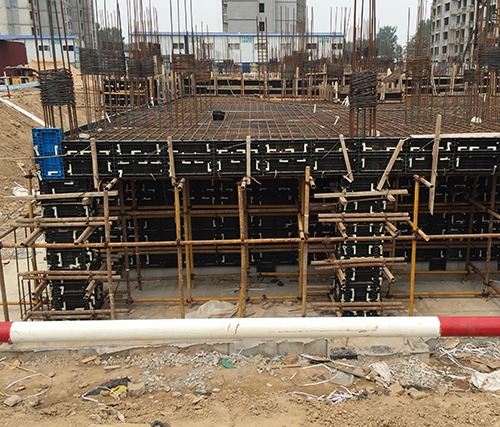
In contemporary construction, plastic formwork has evolved from a niche alternative to a mainstream, high-performance shuttering solution, thanks to its lightweight design, reusability, cost efficiency and easy operability. Unlike traditional wooden, steel or aluminum formwork, plastic formwork is engineered with durable polymer materials, offering excellent structural stability, waterproofing and corrosion resistance. It is highly versatile and compatible with a wide range of concrete pouring scenarios, making it a staple for residential, commercial, industrial and infrastructure projects alike. This article breaks down the four core applications of plastic formwork: wall formwork, column formwork, beam formwork and slab formwork, elaborating on its unique advantages in each construction link.
1. Plastic Formwork for Wall Construction
Wall pouring is one of the most common and critical applications of plastic formwork, suitable for both interior partition walls and exterior load-bearing walls in buildings of all sizes. The standardized, modular design of plastic formwork panels allows for quick assembly and disassembly, enabling construction teams to build straight walls, curved walls and even textured walls with high precision.
Plastic wall formwork boasts exceptional flatness, which ensures the poured concrete walls have a smooth, even surface with minimal honeycombing or pitting, reducing the need for subsequent plastering and finishing work. Its lightweight property means manual handling and installation are feasible, eliminating the need for heavy machinery and speeding up the construction schedule. Additionally, the integrated connecting handles and corner fittings make wall reinforcement simpler, and the material’s waterproof nature prevents concrete slurry leakage, maintaining a clean construction site and improving overall wall quality. Whether for low-rise villas, multi-story apartments or commercial buildings, plastic wall formwork delivers consistent performance and cost savings.
2. Plastic Formwork for Column Construction
Columns are the vertical load-bearing components of a building, requiring formwork with high rigidity, dimensional accuracy and stability—plastic formwork meets these demands perfectly. It is widely used for constructing rectangular, square and even custom-shaped concrete columns, adapting to the structural needs of various projects.
The prefabricated plastic column formwork can be customized to match specific column sizes, with tight splicing gaps that avoid concrete spillage during pouring. The built-in back ribs of plastic panels provide sufficient secondary reinforcement, ensuring the formwork does not deform or expand under the pressure of wet concrete, keeping columns straight and dimensionally accurate. Compared with wooden formwork that is prone to warping and steel formwork that is heavy and difficult to adjust, plastic column formwork is lightweight, reusable and easy to install. It is especially ideal for small and medium-sized projects with multiple identical columns, as the high turnover rate maximizes cost efficiency and shortens the column construction cycle.
3. Plastic Formwork for Beam Construction
Beams serve as the horizontal connecting structures between walls and columns, transferring loads evenly across the building, and plastic formwork is highly adaptable to this complex construction segment. It is designed to fit various beam sizes and cross-sectional shapes, including rectangular beams, T-beams and L-beams, providing reliable support during concrete pouring and curing.
Plastic beam formwork features a flexible splicing system that allows construction workers to assemble the formwork quickly according to design drawings, with precise alignment to ensure beam structural integrity. The smooth surface of plastic panels prevents concrete adhesion, making formwork removal effortless and preserving the integrity of the beam surface without damage. Moreover, plastic formwork resists wear and tear from repeated use, maintaining its shape and strength even after multiple beam pouring cycles. This eliminates the frequent replacement costs associated with wooden formwork and the cumbersome handling of steel formwork, making beam construction more efficient and economical.
4. Plastic Formwork for Slab (Floor) Construction
Floor slab pouring is a key part of building construction, and plastic formwork has become a preferred choice for slab formwork due to its large coverage area, easy support and high stability. It is suitable for constructing flat slabs, ribbed slabs and hollow floor slabs in residential buildings, office towers, warehouses and other structures, delivering uniform load-bearing performance.
The modular plastic slab formwork can be laid out rapidly, with strong compatibility with standard support systems, reducing the time spent on formwork setup and leveling. The material’s lightweight characteristic reduces the load on temporary supports, enhancing on-site safety. Additionally, plastic formwork does not absorb moisture from concrete, ensuring uniform curing and preventing surface cracking of the slab. After concrete solidification, the formwork can be removed quickly and cleaned easily, ready for reuse in the next floor. This not only speeds up the overall construction progress but also significantly cuts down on formwork material waste and labor costs.
Conclusion
Plastic formwork is a highly versatile construction material that covers the full range of core concrete pouring tasks: walls, columns, beams and floor slabs. Its adaptability, durability and cost-effectiveness make it suitable for small-scale residential projects, medium-sized commercial developments and even large-scale infrastructure construction. As the construction industry increasingly prioritizes efficiency, sustainability and budget control, plastic formwork continues to stand out as a practical and reliable shuttering solution, meeting the diverse construction needs of modern building projects.