
Light Steel Formwork and Plastic Formwork Comparison:how to choose?
In the construction industry, formwork is critical to ensuring the quality, efficiency, and cost-effectiveness of concrete structures. Special steel formwork and plastic formwork are two widely used options
4/6/20264 min read
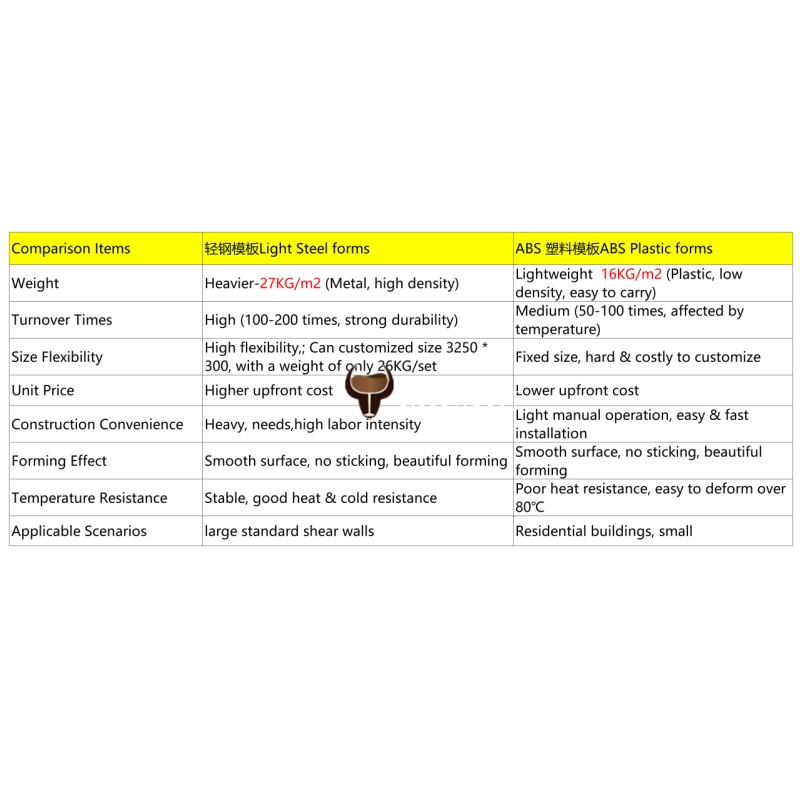
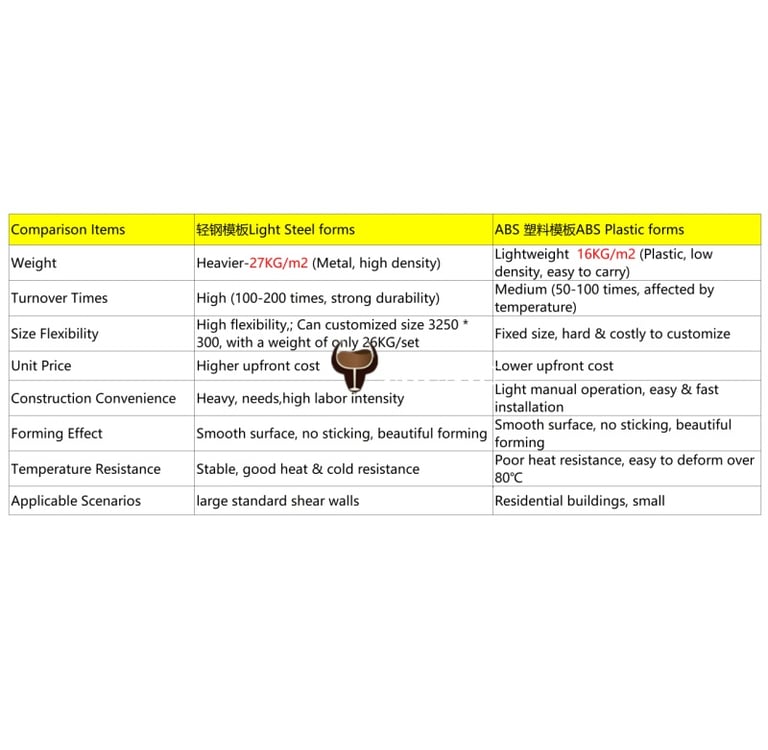
Comparison Between Light Steel Formwork and Plastic Formwork
In the construction industry, formwork is critical to ensuring the quality, efficiency, and cost-effectiveness of concrete structures. Light steel formwork and plastic formwork are two widely used options, each with unique characteristics that make them suitable for different project needs. This article provides a comprehensive comparison of the two types across seven key areas: weight, turnover rate, product flexibility, unit price, product adaptability, temperature resistance, and application scenarios, helping construction professionals make well-informed decisions.
1. Weight
Weight is a key factor influencing construction efficiency and labor intensity. Light steel formwork is crafted from high-strength Light steel, which delivers exceptional structural stability but also results in significant weight. A standard 1.2m×2.4m special steel formwork panel typically weighs 77kg(About 27KG/m2), requiring hoisting machinery for transportation and installation—adding complexity to on-site operations and increasing labor costs. In contrast, plastic formwork is made from lightweight polymers such as polypropylene (PP) or ABS, with one square weighing only 16kg—60% lighter than its steel counterpart. Its lightweight design allows 1-2 workers to handle it manually, greatly boosting construction efficiency and reducing reliance on mechanical equipment.
2. Turnover Times
Turnover rate directly impacts the long-term economic viability of formwork. Thanks to its high-strength material and anti-corrosion treatment, Light steel formwork offers outstanding durability, with a turnover rate of 100-200 uses when properly maintained. Even after repeated use, it retains good structural integrity without noticeable deformation, and its high residual value enables secondary use or recycling once retired. The turnover performance of plastic formwork varies by product quality: high-quality plastic formwork can be reused 50-100 times, while ordinary plastic formwork has a shorter service life of 30-50 uses. However, plastic formwork is prone to aging, deformation, or damage when exposed to prolonged sunlight and heavy loads, limiting its maximum turnover rate compared to special steel formwork in harsh construction environments.
3. Unit Price
The two types of formwork differ significantly in unit price due to variations in raw materials and manufacturing processes. Light steel formwork has a relatively high unit price, usually ranging from $55 to $85 per square meter, stemming from the high cost of special steel and complex processing techniques. In contrast, plastic formwork is more affordable, generally costing between $28 and $55 per square meter—making it a more cost-effective choice for short-term projects or those with limited budgets. However, from a long-term perspective, special steel formwork offers better value for money due to its higher turnover rate, while plastic formwork may require frequent replacement, leading to higher total costs in long-term, large-scale projects.
4. Temperature Impact
Both types of formwork are affected by ambient temperature, but their performance varies significantly. Light steel has excellent thermal conductivity, meaning it heats up quickly in high temperatures and cools down rapidly in low temperatures. In hot weather, the surface of steel formwork may overheat, accelerating concrete water evaporation and affecting curing quality; in cold weather, it can cause the concrete surface to cool too quickly, leading to cracks. Plastic formwork has better thermal insulation due to its hollow structure, which slows down heat transfer between concrete and the external environment. This reduces the risk of concrete cracking caused by extreme temperature changes, but plastic formwork tends to soften and deform when temperatures exceed 80℃, limiting its use in high-temperature construction environments—such as outdoor summer operations or industrial projects with high ambient temperatures.
5. Application Scenarios
The application scenarios of special steel formwork and plastic formwork are closely tied to their inherent characteristics, making each type better suited for specific project needs. Special steel formwork is primarily used in large-scale, high-standard construction projects that demand long-term durability and high structural precision. Typical application scenarios include high-rise and super high-rise residential or commercial buildings, where it can withstand the high pressure of large-volume concrete pouring and maintain consistent flatness for floor slabs and shear walls. It is also widely used in infrastructure projects such as bridges, viaducts, tunnels, and dams, as its corrosion resistance and load-bearing capacity enable it to adapt to harsh outdoor environments and complex engineering conditions. Additionally, special steel formwork is the preferred choice for projects with strict quality requirements—such as industrial workshops, nuclear power plants, and high-precision concrete structures—where deformation and durability are critical factors.
Plastic wall formwork, on the other hand, is better suited for small-to-medium-scale construction projects and scenarios that require flexible on-site adjustments. Its lightweight and easy-to-modify nature makes it ideal for low-to-medium-rise residential buildings, such as townhouses, villas, and multi-story apartments, where construction cycles are shorter and the workload of formwork installation is relatively light. It is also widely used in indoor projects, including commercial interior decoration, basement secondary structure construction, and small-scale concrete components (such as beams, columns, and lintels). For projects with complex or irregular shapes—such as curved walls, special-shaped columns, and decorative concrete structures—plastic formwork’s flexibility and processability give it a distinct advantage. Furthermore, plastic formwork is often selected for temporary construction projects, emergency repair work, or projects in remote areas where hoisting machinery is hard to access, thanks to its ease of transportation and manual operability.
6.Conclusion
Light steel formwork and plastic formwork each have their strengths and weaknesses, with their application scenarios clearly differentiated by their characteristics. Special steel formwork is ideal for long-term, large-scale, and high-demand projects—such as high-rises, bridges, and industrial facilities—thanks to its durability, high turnover rate, and strong load-bearing capacity, despite its heavy weight and high unit price. Plastic formwork, meanwhile, is better suited for short-term, small-to-medium-scale projects, indoor construction, or projects with complex shapes—such as low-rise residences and decorative structures—due to its lightweight design, low cost, and good flexibility, but it is limited by temperature constraints and long-term durability. Construction professionals should comprehensively consider project scale, budget, construction environment, structural requirements, and application scenarios to select the most appropriate formwork type, achieving the optimal balance between construction quality, efficiency, and cost.